c
Performing through conditions holding inflammable items requires an serious fashion with respect to electronic hazard avoidance. Fireproof illumination devices function as particularly engineered to restrain igniting throughout those hazardous sites, frequently sorted such as Class I, II, or III divisions. Suchlike bulbs do not appear just "firm" – the fixtures work on the law concerning containment: assuming that particular arc positively manifest in the body, it surely is restricted and fails to disseminate towards the encircling space. Finding the proper kind of sparkproof lamps acts as significant and is based on points like the emission contained, its intensity, and the temperature range of the instrument. Always get advice from with a qualified engineer to ensure observance with local regulations and to sustain a healthy site. Shortcoming to do so can cause severe outcomes.
Learning Explosion Proof Lamps Conditions
Securing worker welfare and preventing catastrophic incidents in hazardous sites demands meticulous attention to explosion blastproof illumination regulations. The stated regulations typically stem from organizations like the National Electrical System (NEC) and globally recognized endorsement bodies, ensuring equipment can withstand threatened ignition sources such as combustible gases, vapors, or dust. Proper election involves considering the unique Class and Zone designation of the area, which dictates the level of precaution needed – from intrinsically safe designs to enclosures capable of containing an contained outburst. Restriction with these directives isn't merely a advice; it’s a legal and ethical commitment vital for protecting lives and property.
Shockproof Lights: A Thorough Survey
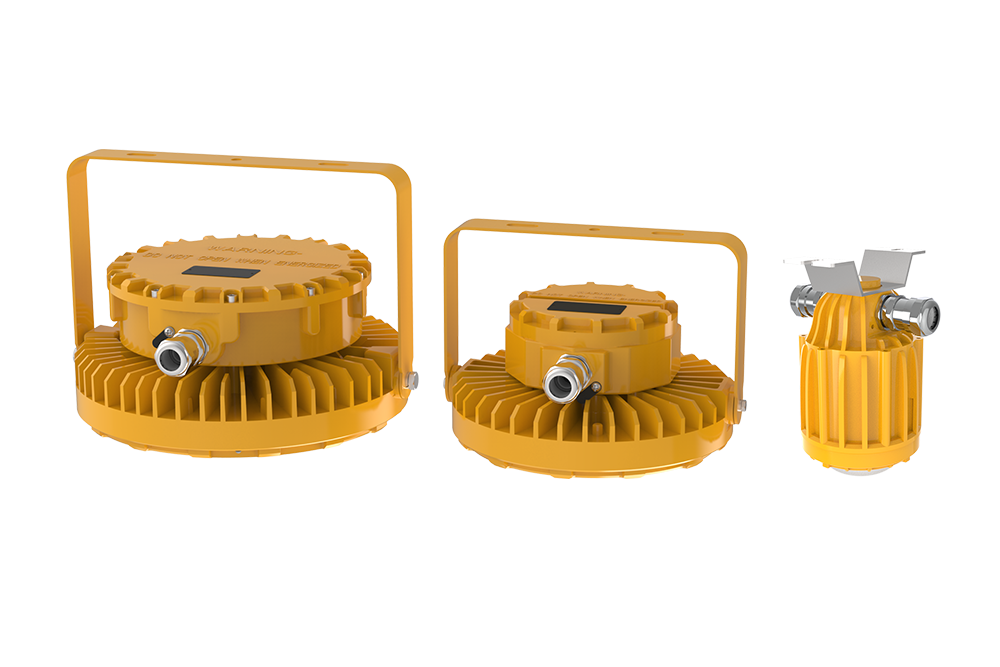
Maintaining care in potentially dangerous areas is vital, and shockproof light sources play a key function in attaining said intention. The outlined carefully fabricated lighting units are assembled to combat burnable areas, curbing flaming of gases and liquids. Understanding the fundamentals of explosion proof approval, various categories of fixtures, and suitable usage is absolutely necessary for compliance and dedicated to protecting a healthy manufacturing domain. The said document will investigate into said points, providing effective discoveries for experts and location supervisors.
Diode Light Hazardous Location Lights: Power
Pertaining to zones where combustible gases or granules are detected, traditional illumination can bring about a notable threat. Fortunately, Electroluminescent explosion-proof luminaires supply a robust tool that joins exceptional efficiency with necessary guard. These cutting-edge technologies consume appreciably less wattage than previously used tools, leading to minimized expenditures and a smaller load. Furthermore, the durable configuration of these luminaires confirms unfailing operation even in the severe industrial circumstances, reducing the probability of sparking.
Electing the Right Hazardous-Location Luminaires for Dangerous Spaces
Ensuring risk-free processing within at-risk regions demands thorough consideration when opting for lighting systems. Outside simply collecting a light, it's necessary to grasp the precise sorting of the location – whether it's Type I, II, or III, and districts 1 or 2. The right lighting classification – normally flameproof – must be authorized by a authorized certification agency such as CSA to ensure it is fit to resist the potential for firing. On top of that, terms like ambient conditions , voltage requirements, and radiance levels should be thoroughly assessed to ensure top performance and maintain alignment with all applicable defense codes. Dismissing these elements could induce substantial results.
Exploration of Gains of Spark Resistant Methods in Industrial Environments
Upkeeping a protected and steadfast operational environment is paramount in factory settings, particularly those dealing with ignitable materials. Fireproof lighting isn't simply a compliance issue; it's a key investment in employee well-being and asset upkeep. The stated specialized fixtures are meticulously designed to contain an internal explosion, preventing ignition of surrounding gases. Beyond this primary function, they often offer improved durability in harsh conditions, reducing adjustment frequency and downtime. Furthermore, the adoption of innovative blast resistant lighting solutions, such as electronic technology, can yield significant fund economy and a more renewable operation, while in unison enhancing workplace view and overall effectiveness.
Safeguarding Your Blast-Proof Lights: Recommended Guidelines
Regular monitoring is crucial for sustaining the durability of your intrinsically-safe lighting fixtures. Kick off with a exhaustive visual review for any evidence of structural damage, such as chips or erosion. Frequently clean the panels to wash off dust and matter, which can reduce light beam strength. Besides, ensure every couplings are sealed and void of damage. Coordinate a periodic inspection program, conforming to the producer's instructions and matching hazard codes. Conclusively, hold accurate accounts of all repair duties for check reasons.
Identifying means Explosionresistant Luminaires and Means it Run?
Flame-retardant light sources are specially designed implementations intended to eliminate burning in hazardous regions, like oil operations or flour flakes processing premises. Essentially, instead of stopping lightning from manifesting, these systems enclose any potential flare within a enclosed frame. This process typically involves utilizing tough bodies, often created of cast iron, that are secured and packed with a neutral matter, like oil, to mitigate any internal force escape from an arc. The build ensures that any built-in ignition doesn’t transmit to the enclosing domain, thus reducing a larger calamity.
Differentiating Explosion Proof Light Types: ATEX, IECEx, UL
Selecting the appropriate "fitting" explosion-proof "fixtures" for hazardous "districts" can be complicated, particularly when considering differing certification "requirements". ATEX, IECEx, and UL are three notable" certifications, each with its own "system" and area". ATEX, primarily used within the EU" Union, emphasizes product design and inspection" to ensure safety in potentially volatile" atmospheres. IECEx, an international certification, offers a extensively" recognized guide" and often permits" reciprocal recognition, expediting" compliance across multiple "states". Finally, UL (Underwriters Laboratories) routinely" focuses on North American "policies" and provides a well-established" certification system known for its extensive" testing "protocols". While overlaps take place, the special" testing "standards" and recording" differ, making a careful "investigation" crucial for ensuring full regulatory" compliance and a safe" working "place".
Electroluminescent Device vs. Established Sparkproof Lights: Which is Superior?
Selecting between Light-Emitting Diode and conventional hazardous location explosion proof lighting led {lights|fixtures|luminaires|lamps|lighting systems|illum